
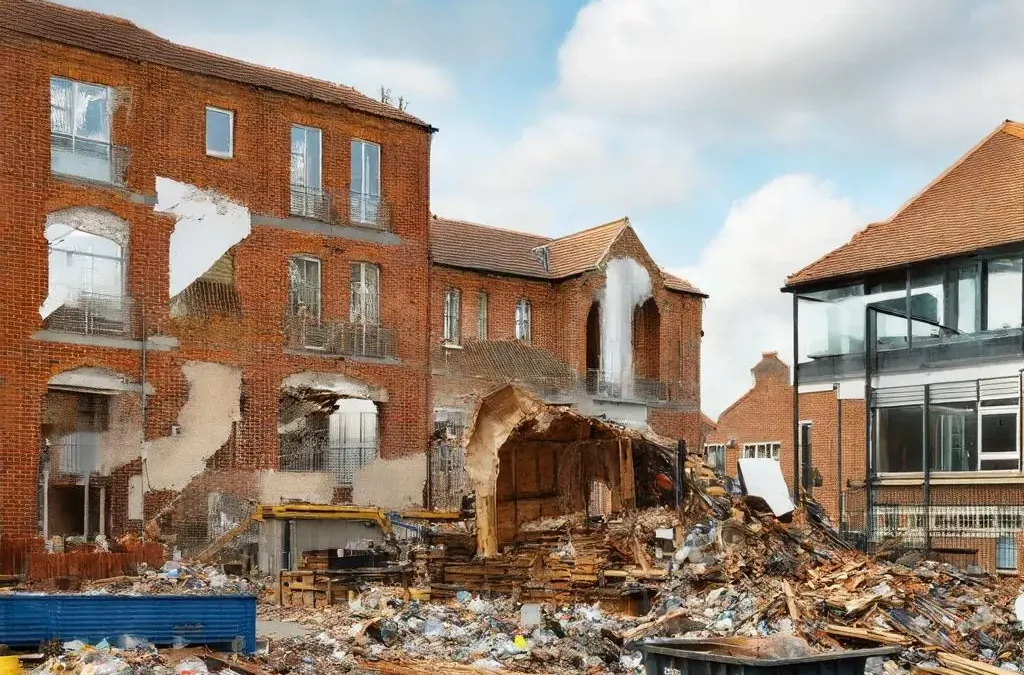
Recent freedom-of-information data has highlighted a notable rise in demolition permits in two London boroughs. A total of 43 permits were issued between 2021 and September 2025, including a 166.6% increase between 2021 and 2023, followed by 19 permits in 2024 and 11 more by September 2025. While these figures relate to specific parts of London, they point to a broader property trend that is highly relevant to Essex. Where land values are strong and existing buildings are outdated, structurally compromised or poorly configured, demolition and rebuild can become a more rational option than extensive renovation.
For homeowners, landlords and developers in Essex, this trend is worth close attention. Across many parts of the county, valuable plots and underused sites present opportunities that may not be fully realised through piecemeal refurbishment alone. In some cases, a dated property with recurring structural issues, poor thermal performance and inefficient layout can consume significant budget without ever delivering the standards expected from a modern home or commercial premises. Selective demolition, or a full rebuild where justified, can unlock better long-term value, improved energy efficiency and more effective use of the site.
This does not mean demolition is always the preferred route. In many projects, renovation and retrofit remain the right solution, especially where a building is fundamentally sound, architecturally important or capable of being upgraded cost-effectively. The key lesson from London’s permit surge is not that every old building should be replaced, but that the decision must be grounded in evidence, cost-benefit analysis and a clear understanding of the site’s end use.
When Demolition Makes More Sense Than Deep Renovation
The decision between demolition and renovation should begin with a full building survey. Without a detailed understanding of structural condition, hazardous materials, previous alterations and service limitations, it is difficult to judge the true scope of works. What appears to be a manageable refurbishment can quickly become a high-risk, high-cost project if major defects are uncovered after work starts.
Demolition tends to make more sense where the building suffers from serious structural deterioration, extensive water ingress, poor foundations, unsafe alterations, severe layout limitations or prohibitively expensive compliance upgrades. The same may apply where the property’s design no longer suits market expectations, for example in homes with inefficient room arrangements or commercial buildings with limited servicing capacity. If deep retrofit would still leave major compromises in performance, usability or lifespan, rebuilding may offer better value.
That said, the most effective approach is often selective rather than absolute. It may be possible to retain viable elements of the building, such as foundations, sections of the superstructure or certain load-bearing walls, while removing the parts that are defective or no longer suitable. This can reduce both carbon impact and project cost, while preserving elements that still have practical value. A careful appraisal of what can be retained is therefore essential before any demolition strategy is finalised.
High land values also shift the equation. When the underlying plot is worth significantly more than the building standing on it, owners are more willing to invest in a solution that maximises the site’s potential. This is one reason London has seen growth in demolition permits, and it is increasingly relevant in Essex locations where demand is strong. For landlords and developers in particular, the question is often not simply what it costs to renovate, but what end value, rental performance or commercial utility the completed project will achieve.
A Practical Low-Waste Approach for Essex Projects
Whether a project involves full demolition, strip-out or selective dismantling, the process should be planned to minimise waste and maintain compliance from the outset. A low-waste strategy is not only better environmentally; it is also often more efficient and financially sensible.
The first step is a full survey, including the identification of hazardous materials such as asbestos and other contaminants. These issues must be properly assessed and handled by qualified professionals before wider demolition or clearance begins. Attempting to proceed without this stage can lead to delays, legal issues and serious health and safety risks.
Next comes soft-strip and careful dismantling. Before heavy demolition starts, reusable and recyclable materials should be removed methodically. Bricks, timber, metals, fixtures and fittings can often be salvaged, separated and directed into appropriate reuse or recycling streams. This is especially important for clients seeking a lower-waste project outcome and a clearer account of material handling. Segregating waste streams on site supports higher recycling rates, reduces contamination and helps ensure that valuable materials are not unnecessarily lost.
All waste movements should be handled only by licensed carriers, with duty-of-care paperwork maintained throughout. This is a fundamental requirement, not an administrative afterthought. Clear documentation protects homeowners, landlords and developers from liability and provides assurance that waste has been transported and processed responsibly. In practice, working with an experienced waste and demolition partner makes this process far more straightforward, particularly on projects with mixed waste types, site access constraints or phased demolition schedules.
A disciplined approach to waste management also aligns with growing client expectations around sustainability. In today’s market, responsible demolition is not simply about taking a structure down efficiently. It is about doing so in a way that reduces landfill reliance, maximises recycling and supports the wider environmental performance of the redevelopment.
Designing for Modern Performance, Access and Compliance
If demolition or major strip-out is undertaken, the next priority is to ensure the replacement or refurbished scheme is designed for long-term performance from day one. This is where projects in Essex can benefit most from strategic planning. A rebuild or major reconfiguration creates the opportunity to deliver better insulation, improved airtightness, low-carbon heating systems, solar readiness and electric vehicle charging infrastructure. Rather than forcing modern expectations into an outdated shell, owners can shape the property around present and future requirements.
For residential projects, this may mean creating layouts that better suit contemporary living while significantly reducing energy demand. For commercial premises, it may involve more efficient servicing, better workflow, improved staff facilities and lower operating costs. In both cases, early design decisions influence not only comfort and sustainability, but also long-term asset value.
Urban logistics must also be considered at the planning stage. In Essex towns and constrained sites, access can have a major effect on programme, cost and compliance. The right waste solution depends on the location and the nature of the works. Skip sizes ranging from small 2-yard skips to larger 14-yard options can support different phases of clearance and demolition, while wait-and-load services may be the most practical choice for tight streets or sites where skips cannot be left in place. Site welfare, secure access routes and the safe movement of vehicles and materials all need to be integrated into the delivery plan.
Neighbour and permit considerations are equally important. Demolition and major renovation works can affect adjoining owners, nearby occupiers and local traffic conditions. Noise, dust, timing, access and safety controls should all be managed proactively. Before works begin, clients should ensure that the required permissions, notices and approvals are in place. A well-prepared contractor will help identify these requirements early and support a smoother project path.
Evidence-Led Decisions Deliver Better Outcomes
The rise in demolition permits in parts of London reflects a practical response to changing economics, ageing building stock and the increasing value of well-located land. Essex is not identical to London, but the underlying lesson is highly relevant. Where a building is structurally poor, inefficient or fundamentally unsuited to modern needs, demolition or selective dismantling may deliver a better outcome than an expensive attempt to renovate beyond its limits.
For homeowners, landlords and developers, the most effective route is rarely based on assumption. It comes from evidence: a proper survey, a realistic appraisal of structural condition, a clear understanding of end value and a delivery plan that prioritises compliance, waste reduction and energy performance. In many cases, retaining viable structural elements can control cost and carbon. In others, a carefully planned rebuild may unlock the full potential of the site.
The strongest projects are those that combine commercial logic with responsible execution. That means planning demolition carefully, salvaging what can be reused, segregating waste properly, using licensed carriers, maintaining duty-of-care records and designing the completed property for long-term efficiency. With this approach, Essex property owners can respond to the same pressures visible in London while delivering lower-waste, higher-performing and more future-ready developments.

